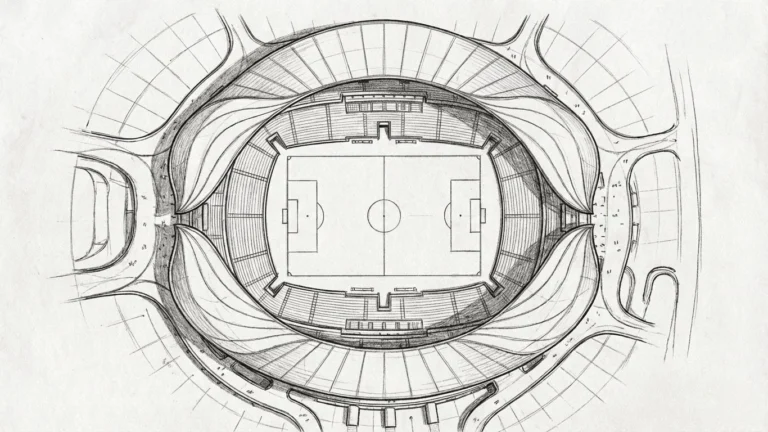
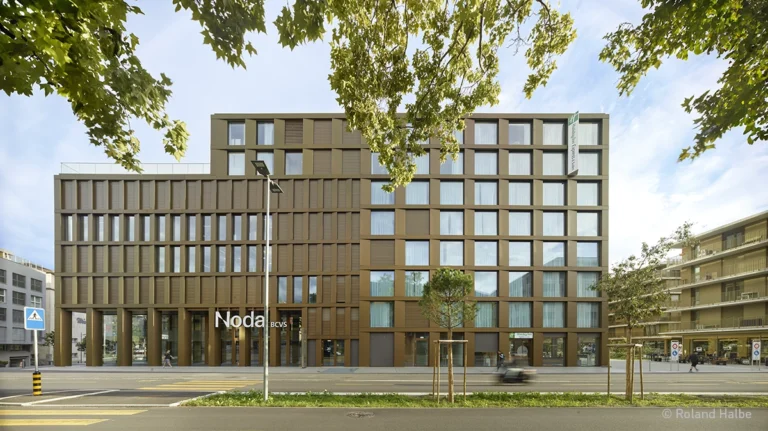
Sion, in the heart of the Swiss Alps, is undergoing a process of urban renewal that seeks to give a second life to its industrial infrastructures. The best example of this change is found next to the train station, where a former concrete car park has been transformed into the cultural heartbeat of the city.
The Noda BCVS congress and music center, designed by the Bonnard + Woeffray Architects studio, represents a radical metamorphosis that elevates the concept of architectural recovery. The project does not attempt to hide its utilitarian past; on the contrary, it uses it as a canvas for an intervention of pure lines and geometric sobriety. In this new setting, acoustics and climatic comfort have become the invisible protagonists of a multi-purpose hall that must respond both to the demands of a chamber concert and the functionality of an international congress.
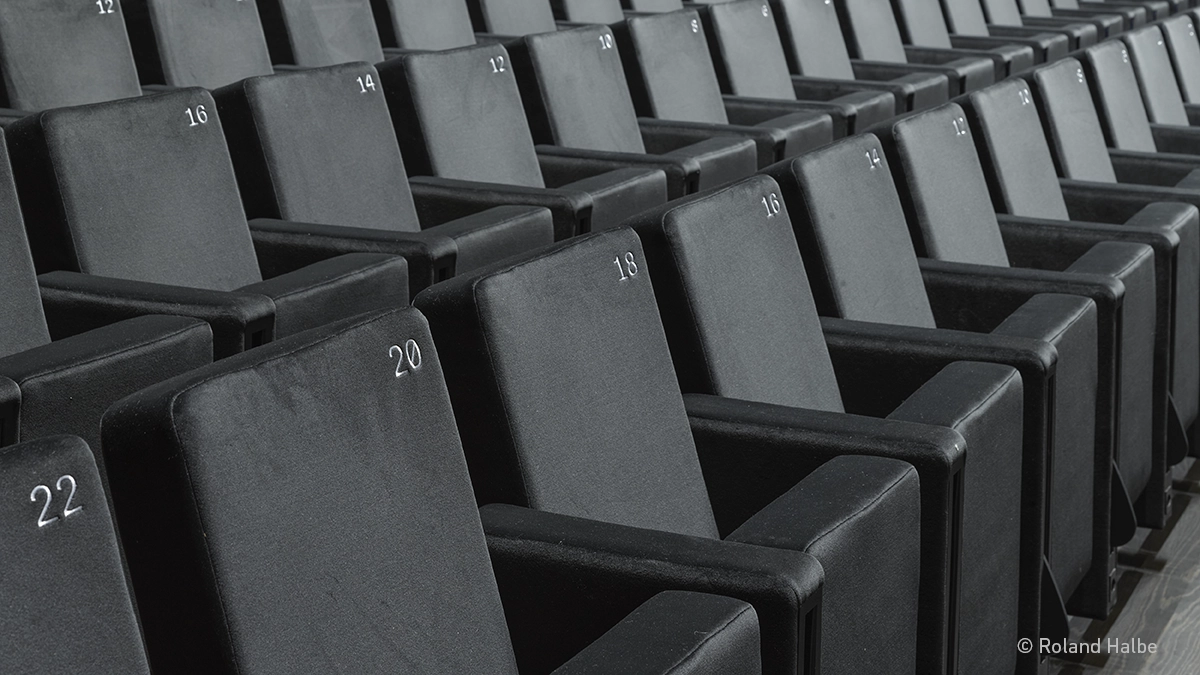
The true innovation of this space lies beneath the audience seating. For the first time, Figueras has adapted its iconic Flex series by incorporating a ventilated central pedestal in these models that acts as the silent lung of the auditorium. This displacement air conditioning system allows the air to be renewed individually directly at the base of each seat. By dispensing with traditional floor grilles, the architects have achieved a visually clean stalls area, where nothing interferes with the propagation of sound or the aesthetics of the design.
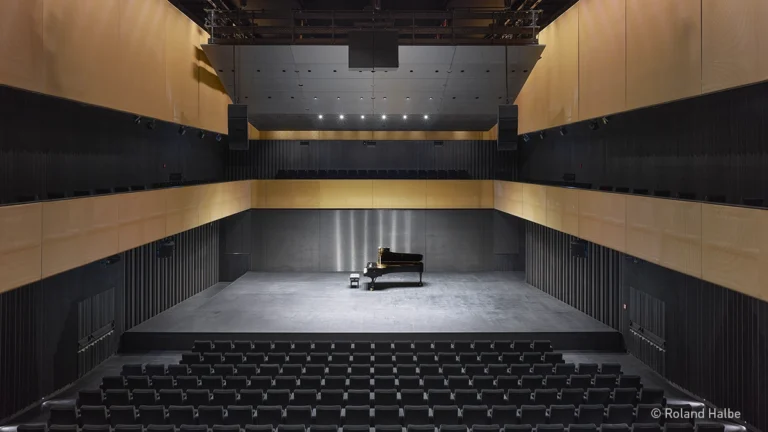
The customization of materials reinforces this search for tactical and lasting excellence. In the stalls area, the customized Flex model integrates electrical connectivity and custom-sized anti-panic tables made of technical material from the ARPA firm, chosen for its resistance and its anti-fingerprint finish. In the balcony, a more compressed version with side panels extending practically to the floor maintains the visual alignment of the whole, ensuring that the spectator’s experience is identical at any point of the capacity.
With a flexible capacity of up to 600 seats and the first two rows being removable, the Noda BCVS positions itself as a benchmark of versatility in the Canton of Valais. The finishes in black velvet and the embroidered numbering on each seat close an intervention where detail engineering allows the architecture to breathe.
Sion is no longer just a railway transit point; it now has a venue capable of demonstrating that the forgotten spaces of the city can house the most advanced technology in the sector.